















Too Many Tools? Connect
Your Multi-Outlet
Operations in One Platform
Multi-outlet businesses often rely on multiple tools for training, checklists, audits, scheduling, maintenance, and communication. TreeAMS connects them into one operational command system, so teams and leaders can work from the same data.

Signs Your Multi-Outlet Team Is Using Too Many Disconnected Tools

Too many logins per-shift
Your outlet managers log into four or five separate apps, each with its own credentials, interface conventions, and notification patterns.
Reporting starts with piecing data together
Board reports often require information from six or more exports, with numbers manually reconciled before they can be used.
New managers spend weeks learning the stack
It can take two to three weeks just to learn which system to use for each task.
Simple questions shouldn't take days to answer
Questions like “Which outlet is performing best, and why?” or "Where is our biggest execution risk this quarter?" can require days of analysis from your managers.
Your technology spend keeps adding up
With multiple tools serving overlapping needs, total annual spend can exceed the cost of a single platform, while ROI becomes harder to measure.
Every new hire can add another tool
Every senior operational hire brings preferences for different tools, and the stack grows rather than consolidates over time.
Why Multi-Outlet Businesses End Up With Too Many Tools
It usually starts with a good reason. One team adds a training platform for SOP consistency, another adds a ticketing tool for maintenance issues, and another adds a checklist app for daily execution.
Over time, these tools become difficult to replace. Data stays in separate systems, teams own different platforms, and consolidation feels costly. But the result is a technology stack that keeps growing without necessarily improving how the operation works together.

The Hidden Cost of Legacy Systems
in Multi-Outlet Operations
The visible cost of too many technology systems is the total amount of
the
subscriptions. However, the invisible costs are usually two to three
times larger:
For most operators evaluating consolidation, the total three-year cost of
ownership
on TreeAMS lands 40–60% below the aggregated cost of the current stack. This
is
before accounting for the strategic value of unified data.
What Changes When Every Outlet Runs on One Operations Platform
When audits, checklists, tickets and business data sit in separate tools, someone has to join them up by hand. Bringing them onto TreeAMS removes that work, and makes the most useful layer possible.
Three capabilities, one data model
OPERATE, CONNECT, and PERFORM only work together when all your data lives in one place. That’s what lets TreeAMS show why results differ across outlets, not just what happened. Separate point solutions can’t do this, because their data never meets.
See how it works
OPERATE
Daily execution: checklists, audits, SOPs, tickets, etc.
CONNECT
Native integration with POS, ERP, IoT, HR, and accounting.
PERFORM
Links operational signals with business outcomes.
A Single Operational
Data Model
Operations, staff and integrated business system data live in one system with one data model. No more reconciling reports, and one source for the board pack.
One App for The Field,
One View for HQ
Outlet managers see their shift on one app, Regional supervisors and the COO see their whole business in one dashboard. Onboarding a new outlet manager is measured in hours, not weeks.
A Rationalised
Vendor Relationship
Consolidate contracts, renewals, security reviews, and support under a simpler setup. IT and procurement recover meaningful capacity.
Pricing that Grows
per Outlet
Per-outlet pricing that scales cleanly with the business, without seat-count multipliers, module bundle upgrades, or opaque tier changes.
What Our Customers Say
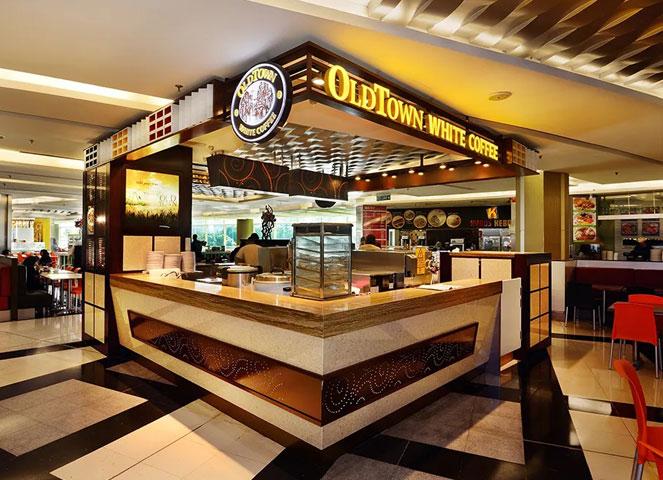

“ We chose TreeAMS because it's the only system that fits into the multiple franchise operation business requirements that we need. ”
“ TreeAMS has been absolutely instrumental in allowing our business to scale. From SOPs to onboarding and training, it adds real value. ”

“ TreeAMS has transformed a one-dimensional rostering process based on experience and day-of-week assumptions into a cost-saving solution. We can now roster teams and plan product orders using projected tourist arrivals and forecasted weather. ”
“ This is what my team has been wanting to see: someone managing the entire business based on one dashboard. All data locked in by 9am, real-time, paperless. It becomes a performance diary, all in one dashboard. ”
See What Your Consolidated Stack
Could Look Like
Bring your current tools, outlet count, and annual spend. We’ll
show what TreeAMS can
replace, what stays, the estimated cost difference, and a phased
migration plan.
Frequently Asked Questions
Most multi-outlet operators evaluating consolidation find that TreeAMS delivers a three-year total cost of ownership 40–60% lower than the aggregated cost of their current stack. That comparison includes direct subscription savings, reduced integration and reconciliation overhead, lower vendor management cost, and shorter onboarding cycles. It does not attempt to quantify the strategic value of unified data, which most customers describe as the more significant benefit.
No. Consolidation is typically phased over one quarter, aligned to your existing vendor renewal cycles so that no subscription is cancelled with unused term remaining. The first tools to retire are usually those with the highest functional overlap and the nearest renewal. Business-critical tools with active use are retired last, after their functionality is fully operational within TreeAMS.
Content: training modules, audit templates, SOP libraries, checklist configurations are migrated into TreeAMS's modules during onboarding. Historical data can be imported for reporting continuity or archived, depending on your data retention requirements. Nothing you have built in existing tools is lost in the transition.
This is the most common practical obstacle to consolidation, and it's addressed as part of the assessment phase. TreeAMS's role-based permissions and departmental views allow Operations, HR, L&D, operations, finance, and IT each to retain the ownership and visibility they need over their functional area. All while operating on a single unified data model underneath. Departmental control is preserved; data isolation is not.
TreeAMS covers task management, daily checklists, audits and compliance, training with assessment and certification, SOP library and version control, issue tracking, staff management, stock and restock, revenue and royalty tracking, and internal messaging. All as native modules on one platform. For most multi-outlet operators, this covers the entirety of the operational stack. Adjacent functions (finance, HR core systems, POS) are typically retained and integrated via TreeAMS's CONNECT layer rather than replaced.
Consolidation is designed as a phased migration rather than a cutover. Existing tools remain operational until their functionality is fully absorbed and validated within TreeAMS. Field teams briefly operate on both systems during each phase transition. This carries a risk profile comparable to any enterprise software implementation and is materially lower than switching all teams and processes to a new system at once.
Per-outlet, transparently, with no seat-count multipliers or module bundle upgrades. Pricing scales cleanly as the business grows. Implementation and onboarding are quoted separately as fixed-scope engagements.
F&B chains, retail networks, fitness franchises, education centres, and multi-brand groups. Typically brands running 20+ outlets, scaling to hundreds.